Implementing Trauma-Informed Career Guidance in Ukraine: Best Practices for Working With Veterans
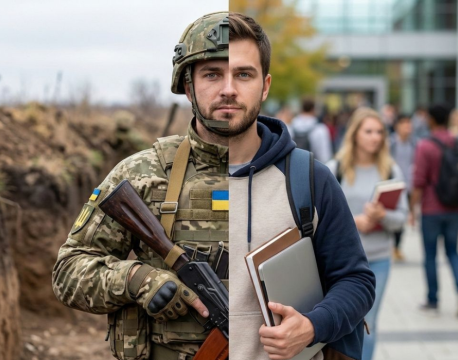
Author: Zlata Tiahunova, career counsellor, Ambassador of the National Europass and Euroguidance Centres in Ukraine
The Scale of the Challenge in Ukraine
A nationwide survey within the "How Are You?" program found that 71% of Ukrainians report a need for psychological support, with the need most acute among service members. Research indicates that more than half of combat veterans experience symptoms of at least one mental health disorder. Approximately 73% of veterans sustained injury or illness during service, and 75% believe they need psychosocial support immediately after discharge [1].
Employment data reveals systemic challenges. According to IREX's survey, only 23% of veterans returned to their previous employment, while 42% took different jobs [2]. About 60% of non-active-duty veterans reported difficulties in their transition to civilian life [2]. More recent data from the Ukrainian Veterans Foundation shows that roughly 30% of veterans cannot find work despite high labor market demand, and over 57% report facing significant barriers — including discrimination, insufficient support, and lack of relevant experience [3].
Why Standard Career Counseling Falls Short for Veterans
Standard career counseling assumes a baseline level of psychological readiness: the client can articulate goals, process information about labor markets, and engage with assessments. For veterans with trauma histories, these assumptions often do not hold.
Trauma affects executive functioning – the higher-order cognitive processes that include reasoning, problem-solving, planning, and organization. Career counselors may mistakenly attribute difficulties with focusing, prioritizing, or follow-through to poor work habits, rather than recognizing them as symptoms of dysregulated brain function caused by traumatic experience. Chronic stress from trauma can also reduce decision-making capacity, alter mood, cause sleep disturbance, and lead to substance use [5].
The Substance Abuse and Mental Health Services Administration (SAMHSA) defines a trauma-informed approach using four Rs: Realize the widespread impact of trauma; Recognize the signs and symptoms; Respond by integrating knowledge into policies, procedures, and practices; and actively Resist re-traumatization [6]. These four principles form the basis of the trauma-informed approach to career counseling for veterans in Ukraine. Although there is still no specialized training program in Ukraine on the trauma-informed approach to career counseling for veterans, career specialists apply the 4 “P” principles after other programs that teach them how to communicate with people suffering from combat trauma, or if they have a basic education in psychology.
The HEART Model: A Framework for Trauma-Informed Career Counseling
Cardello and Wright (2024) proposed the HEART model as the first comprehensive framework specifically designed for trauma-informed career counseling. It integrates evidence-based trauma-informed care principles with practical career counseling applications [5].
Currently, this is a relevant and effective model for career counseling for veterans in Ukraine, which is actively used by veteran career counselors. The emergence of veteran career counselors working on a peer-to-peer basis was made possible by the Unit 6.0 program. Veterans trust such counselors more than civilian ones, which improves cooperation and counseling outcomes. By late 2025, Reskilling Ukraine launched a platform providing up to 10 free individual career consultations for each veteran, led by veteran-counselors. Services include skills analysis, military-to-civilian competency translation, CV preparation, interview coaching, and orientation to education opportunities [7].
Contextual Career Counseling for Veterans
Beyond the HEART model, the contextual career counseling approach specifically addresses military-to-civilian transitions. This framework emphasizes understanding the military environment's unique effects on clients – including its distinct language, norms, rank structure, values, and laws. A contextual career counselor examines a veteran's needs holistically, integrating family dynamics and trauma work into the career planning process [8].
Career development research identifies several constructivist and narrative approaches that are particularly effective for veteran populations [9]:
- Narrative career counseling: helping veterans articulate their military experience as a coherent story and then translate it into civilian career language
- Strengths reframing: converting military competencies into employer-recognizable skills
- Mandatory psychological readiness assessment: evaluating a veteran's mental health baseline before beginning formal career planning
- Positive psychotherapy integration: combining career counseling with positive psychology interventions to simultaneously address well-being and vocational goals.
Practical Recommendations for Career Counselors
Before Career Planning Begins
- Assess psychological readiness - use brief screening tools before initiating formal career planning. If the veteran is in acute crisis, connect psychological support services before proceeding.
- Establish safety first - explain the career counseling process transparently, define roles, and emphasize the voluntary nature of disclosure. Make clear what career counseling is and is not.
- Normalize the transition challenge - share that 60% of non-active-duty veterans report transition difficulties and that seeking support is a sign of strength, not weakness.
During Career Counseling Sessions
- Use narrative methods - invite the veteran to tell their story, then collaboratively translate military experience into civilian career language. Avoid "interrogating" approaches that may feel like debriefing.
- Leverage skills-based tools - platforms like SkillLab [4] provide objective data on transferable skills, which can ground career planning in evidence rather than subjective assessment alone.
- Watch for hidden stress signals - if a client presents with repeated difficulty maintaining employment, conflict with coworkers, or inability to commit to a career direction, consider these as potential indicators of unresolved trauma rather than motivational deficits.
- Build hope through incremental goals - avoid overwhelming career plans. Use micro-goals and celebrate small victories.
- Integrate peer elements - where possible, incorporate group sessions, peer mentoring, or connect with veteran-led career services such as UNIT 6.0.
Systemic-Level Practices
- Family inclusion - the new Veterans Policy Strategy recognizes family members for the first time; engage families in career planning where appropriate, since over 80% of veterans cite family as essential to their social integration.
- Interdisciplinary collaboration - career counselors should maintain referral pathways to psychologists, psychotherapists, and social workers. The most effective models combine career and psychological support simultaneously.
- Ongoing training - career counselors working with veterans should pursue professional development in trauma-informed care, military culture competency, and the evolving Ukrainian legal and benefits landscape for veterans.
Career counselors must understand signs and symptoms of trauma, know how to avoid re-traumatization, and be familiar with the science of chronic stress and resilience. Trauma-informed career counseling is an emerging field, and ongoing professional development, supervision, and consultation are essential.
Trauma-informed career counseling for veterans in Ukraine is not a niche specialization – it’s an emerging national necessity. With millions of Ukrainians expected to transition from military to civilian life in the coming years, career counselors are positioned at a critical intersection of employment services and psychosocial support. At this stage of development of the career counseling system for veterans in Ukraine, specialists are gaining more practical experience “in the field,” developing their own unique techniques and methodologies, which will eventually be scientifically refined and disseminated among interested stakeholders.
References
- Razom. (2025). Healing the invisible wounds: How Razom z Toboyu is changing the culture of mental health in Ukraine. https://www.razomforukraine.org/healing-the-invisible-wounds-how-razom-z-toboyu-is-changing-the-culture-of-mental-health-in-ukraine/
- IREX. (2021). Veteran reintegration program: Veterans’ current employment conditions. https://www.irex.org/sites/default/files/2%20Veterans%E2%80%99%20Current%20Employment%20Conditions.pdf
- International Renaissance Foundation. (2024). Employment of veterans: What the analysis of Ukrainian legislation has shown. https://www.irf.ua/en/za-dva-roky-povnomasshtabnoyi-vijny-v-ukrayini-rosiya-zavdala-zbytkiv-klimatu-na-32-mlrd-pidsumky-doslidzhennya/
- SkillLab. (2025). Від військового до цивільного життя: як українські ветерани долають кар'єрний перехід за підтримки SkillLab. https://skilllab.io/en-us/news/from-military-to-civilian-life-ukraine-veterans
- Cardello, L. M., & Wright, G. G. (2024). Infusing Trauma-Informed Care in Career Counseling: Promising Practices and a Proposed Framework. Trauma Counseling and Resilience, 1(1). https://doi.org/10.33470/ 2997-7088.1015
- Substance Abuse and Mental Health Services Administration. (2014a). SAMHSA’s concept of trauma and guidance for a trauma-informed approach.Retrieved July 15, 2024, from http://store.samhsa.gov/shin/content//SMA14-4884/SMA14-4884.pdf
- Reskilling Ukraine. (2025). Від служби до цивільного життя: кар’єрні консультації для ветеранів. https://www.reskillingukraine.com/consultants
- Rausch, M. A. (2014). Contextual career counseling for transitioning military veterans. Journal of Employment Counseling, 51(2), 89-96. https://doi.org/10.1002/j.2161-1920.2014.00044.x
- Ihnatovych, O. (2025). Veterans’ psychological support during reintegration into civilian life. Psychology and Personality, 1, 54-64. doi: 10.33989/2226-4078.2025.1.54.