Labour market information in support of career decisions
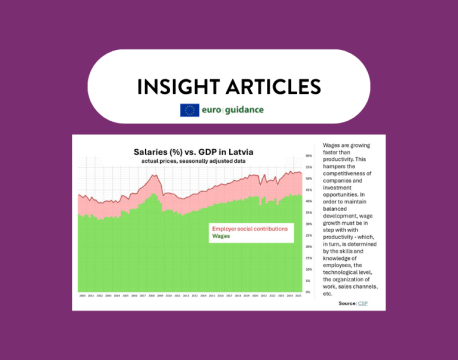
One of the skills that career counsellors struggle with is using labour market information, in particular – statistics. Euroguidance Latvia engaged Jānis Hermanis, Financial and Tax Expert of the Latvian Employers Confederation to deliver online training on "Statistics for Career Counsellors".
Understand what is happening in the labour market
Career guidance professionals help people make decisions about education, training and employment. To provide reliable guidance, they need more than knowledge of occupations and study programmes. They also need to understand what is happening in the labour market and how it may develop. Statistical data can provide this wider perspective. Data on employment, unemployment, wages, job vacancies, demographics and skills demand can strengthen conversations with clients and support them to make evidence-informed decisions.
Labour market statistics help guidance professionals identify trends, compare sectors and regions, and assess the opportunities and risks associated with different career paths. They are most useful when combined with information about a client’s interests, abilities, circumstances, and ambitions.
International sources of labour market information
Several international organisations provide data that can support career guidance:
- Eurostat offers comparable European data on employment, unemployment, education, wages, demographics and regional differences: https://ec.europa.eu/eurostat/data/database ;
- The OECD provides indicators and analysis on education, skills, employment and the transition from education to work: https://data-explorer.oecd.org/;
- Cedefop publishes European skills forecasts, labour market intelligence and information on changing occupations and qualification needs: https://www.cedefop.europa.eu/en/tools/key-indicators-on-vet/indicators;
- The World Bank provides global indicators that make it possible to examine economic, demographic and labour market developments across countries: https://data.worldbank.org/indicator;
- The International Monetary Fund supplies macroeconomic data that can help professionals understand the broader economic context influencing employment and investment.
These sources can be complemented by national statistical offices, public employment services, tax authorities, and sectoral organisations. National sources often contain more detailed or recent information, while international databases make cross-country comparisons possible.
How to use data in guidance
During the training attention was devoted to reading, interpreting and critically evaluating statistical data. Using statistics effectively requires critical interpretation.
- Guidance professionals should first check the definition of an indicator, the period covered, the geographical level and the population included. Metadata can clarify how the data were collected and whether figures from different countries or years are genuinely comparable.
- Professionals should also look beyond a single percentage or ranking. A rising number of vacancies, for example, may reflect employment growth, staff shortages, high employee turnover or difficult working conditions. Wage data may vary according to age, experience, region and working hours. Combining several indicators usually produces a more reliable picture.
- In practice, labour market data can be used to:
- explore growing and declining sectors;
- place individual career choices in a wider social and economic context;
- discuss regional or international mobility;
- compare education levels with employment outcomes;
- identify emerging skills needs;
- challenge assumptions about occupations.
Statistical literacy enables guidance professionals to turn complex labour market information into meaningful questions and realistic options. The goal is to help clients make better-informed decisions in a changing world of work.
Author: Ralfs Spāde and Ilze Jansone, Euroguidance Latvia
Picture: Euroguidance Latvia