Strategic Theory of Career Decision-Making – An Innovative Integrative Framework for Career Decision-Making in the 21st Century
The Strategic Theory of Career Decision-Making (STCD) is an integrative research and methodological framework designed to support complex, reflective and strategically informed career decision-making. Developed through doctoral research into occupational choice and career decision-making, the theory responds to growing uncertainty in the labour market, technological change, evolving professions and the need for lifelong adaptability. STCD addresses a gap in how different factors are integrated into career decisions, referred to as the CDI gap (Configurational Decision Integration gap). While existing career theories provide valuable insights into individual factors influencing career development, they offer less explicit guidance on how these diverse factors can be organised, weighed and brought together to form a coherent basis for making career decisions in specific situations.
STCD is built around six key perspectives: psychological, sociological, pedagogical/educational, philosophical/value-based, economic and strategic. Strategic thinking plays a particularly important role as a coordinating principle, helping individuals navigate uncertainty, assess risks, set priorities and consider their long-term direction. The framework systematically connects three levels: the micro level of the individual, the meso level of their social environment and the macro level of the labour market.
In practice, STCD follows a six-step process, beginning with identifying a career-related question, mapping and weighing different perspectives, and recognising tensions and conflicts, before bringing these insights together and defining concrete next steps. The process can be used to structure individual career guidance sessions, develop worksheets for career education or facilitate group reflection. To make the framework more accessible, the author uses an original orchestral metaphor in which each perspective is represented by a different section of an orchestra. This helps reduce the cognitive effort required to understand and work with abstract concepts.
Although the framework primarily targets pupils and students at key educational and career transition points – for example, pupils in the final year of primary school choosing a secondary school – it can also be applied to adults considering career changes and by career guidance practitioners themselves. The framework has strong potential for application in different contexts and has been translated into a research instrument. Its empirical validation in school settings is currently underway.
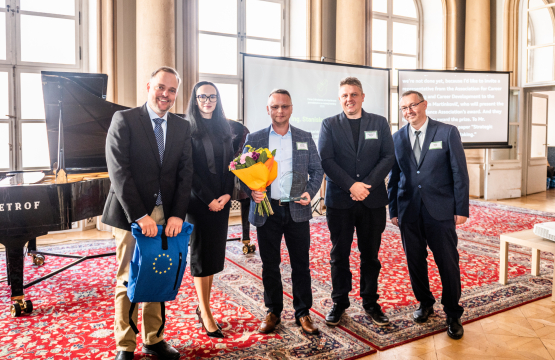
- Author / Originator: Stanislav Žaludek
- Country of origin Slovakia
- Resource launch date November 16, 2026
- Main focus Career Development
- Modality Remote, Presential
- Context Schools, Adult education
- Type Tool, Framework
- Target group Career Guidance Practitioners, Primary School Students, Secondary School Students, Adults considering career changes
- This practice developed through Erasmus+ No