VI INTERNATIONAL FORUM ''2025 HUMAN CAPITAL IN THE FOCUS OF TRANSFORMATIONS''
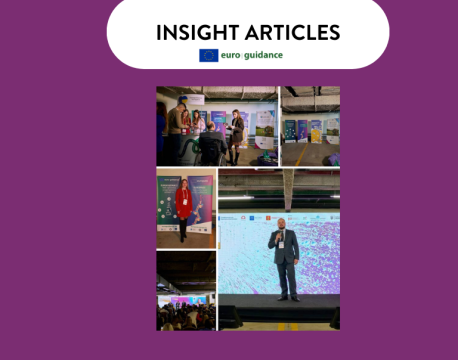
Author: Yana Bobyrets, Euroguidance Ukraine
On the 25th of November 2025, the National Qualifications Agency in Ukraine held the VI International Forum which was called “2025 HUMAN CAPITAL: In the Focus of Transformations”. The annual event brought together 39 speakers, over 300 onsite participants, and approximately 4,000 online viewers which allowed for strategic dialogue between public authorities, businesses, educators, expert communities and international partners.
The forum focused on the development of human capital as a key prerequisite for Ukraine’s economic recovery and its integration into the European Qualifications Area.
The agenda of the forum was structured around four key thematic sessions. Each of these sessions reflected on the transformations which are shaping modern human capital in Ukraine:
- “Ukraine in the EU skills and employment ecosystem,”
- “Education as a necessity for the economy and the labour market,”
- “Professional qualifications in the fields of national security and defence,”
- “Professional qualifications in education.”
Another key outcome of the thematic sessions, were that participants discussed Ukraine’s integration into the European skills, education and employment area, including the opportunities this process opens for Ukrainian professionals. Speakers addressed the referencing of the National Qualifications Framework with the European Qualifications Framework and explained its importance for the mutual recognition of qualifications. A particular emphasis was placed on the role of the National Qualifications System in building a resilient economy and a competitive labour market.
The second session focused on the role of education and the qualifications system as being the key drivers of economic development, as well as on the major changes introduced by the updated legislation in vocational education. Speakers explored how the renewed system can better supply the economy with skilled professionals, how education providers can adapt to labour market needs, and what the future development of vocational education in Ukraine may look like.
A special contribution was made by guest speaker Ursula Renold, who presented the study “Skills and Education Matching to Labour Market Needs in Post-Disaster Recovery”. She shared her research findings and vision on how joint studies, systematic analysis and european experience can contribute to human capital development and better alignment between skills and labour market needs during the recovery process after major disruptions.
The Forum also featured an exhibition of qualification centres. Special attention was given to the activities of the National Centres for Euroguidance, Europass, Eurodesk and the NCP EQF in Ukraine. The centres delivered thematic masterclasses, provided consultations to participants and presented the outcomes of international initiatives in the areas of skills development, qualifications and career mobility.
The Role of Euroguidance at the Forum
The National Euroguidance Centre in Ukraine was an active platform for professional communication during the forum. During the event, the centre’s team provided individual consultations to visitors on career pathways, professional development opportunities, learning options and international educational mobility.
Particular attention was devoted to engagement with professionals working in the field of career guidance and career counselling. Through live dialogue, participants discussed current challenges facing the profession, career support tools, european approaches to the development of career counsellors’ competences and the practical use of Euroguidance network resources in the Ukrainian context.
The participation of Euroguidance in the forum confirmed its key role in shaping a modern career guidance system in Ukraine, strengthening the link between education and the labour market and promoting Ukraine's integration into the European learning and employment space.
The event was held with financial support from the European Union, Germany, Poland, Estonia and Denmark. This was part of the multi-donor initiative called ‘Skills4Recovery’ and was implemented by Deutsche Gesellschaft für Internationale Zusammenarbeit (GIZ) GmbH and the Solidarity Fund PL (SFPL).